
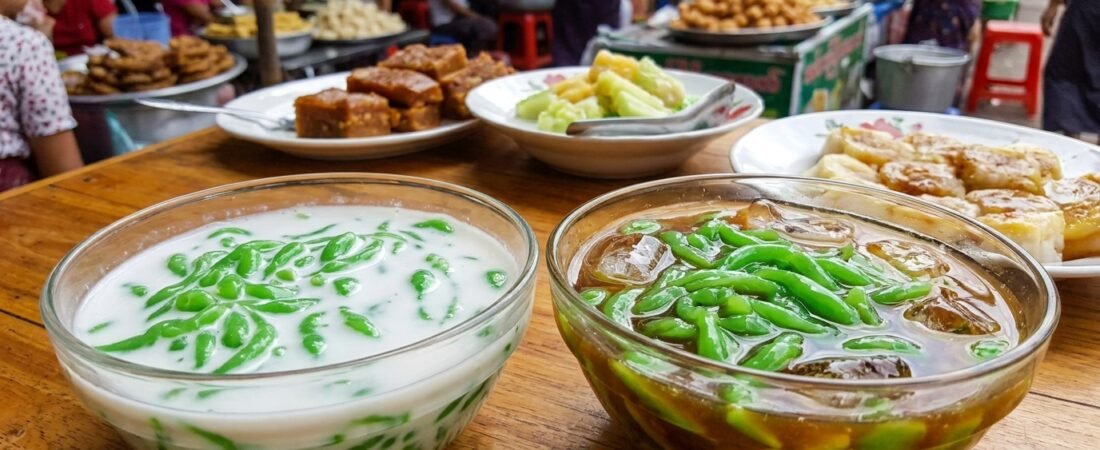
Mont Let Saung (မုန့်လက်ဆောင်း) is a cherished traditional Burmese cold dessert that becomes widely popular during the hot summer months and festive occasions like Thingyan, the Burmese New Year Water Festival. It is a refreshing and aromatic treat renowned for its simplicity, delicate flavors, and natural cooling properties.
At the heart of the dessert are the signature rice jelly droplets, often called noodles, which are made by cooking a mixture of rice flour or glutinous rice flour with water and a small amount of limewater to create a smooth, slightly chewy texture. While still hot, this mixture is pressed through a perforated sieve directly into a bowl of cold water, forming short, droplet-shaped noodles that are left naturally white or dyed a vibrant green using natural pandan leaf extract. These jelly droplets are served in a sweet, aromatic base made from unrefined palm sugar, known as jaggery syrup, which is created by boiling the jaggery with water until dissolved and straining it to yield an earthy, caramel-like sweetness. While the classic and lighter version, Jaggery Mont Let Saung (ထန်းလျက် မုန့်လက်ဆောင်း), simply pairs the jelly droplets and jaggery syrup with cold water and ice for a light, hydrating drink, the popular Coconut Milk Mont Let Saung (အုန်းနို့ မုန့်လက်ဆောင်း) adds freshly squeezed coconut milk for a richer, creamier, and more indulgent variation.
Served ice-cold with crushed ice or ice cubes and frequently sprinkled with toasted sesame seeds on top for an added nutty aroma, Mont Let Saung holds deep cultural and traditional health significance in Myanmar. In traditional Myanmar medicine, both jaggery and rice jelly are believed to possess inherent cooling properties, making the drink an essential refresher to help beat the scorching summer heat. Beyond its cooling benefits, the dessert embodies strong community spirit, standing out as one of the most beloved offerings served at Satuditha—free food donation stalls—during Thingyan and local religious ceremonies, where sharing it symbolizes hospitality, generosity, and merit-making.